
Selections:
Louis Armstrong – Lazy River
Kokomo Arnold – Milk Cow Blues
Mildred Bailey – St. Louis Blues
Cab Calloway – Reefer Man
Leroy Carr – New How Long, How Long Blues
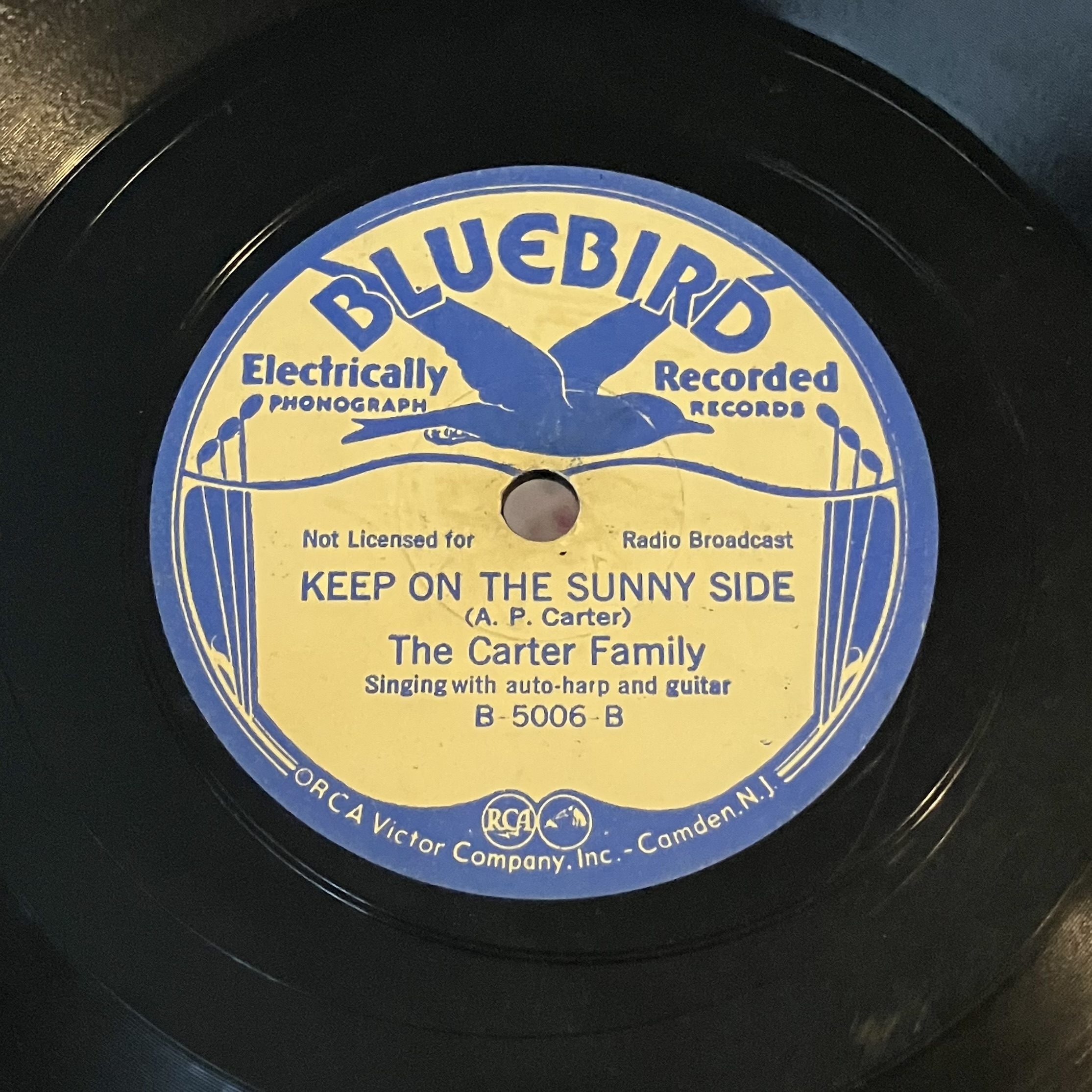
Carter Family – Keep On The Sunny Side
Casa Loma Orchestra – White Jazz
Robert Cooper – West Dallas Drag No. 2
Delmore Brothers – Brown’s Ferry Blues Pt. 2
Duke Ellington – Solitude
Bob Dunn’s Vagabonds – Graveyard Blues
Coleman Hawkins – Body & Soul
Billie Holiday – Billie’s Blues
Ink Spots – Swingin’ on the Strings
Blind Willie McTell – Cold Winter Day
Jimmie Rodgers – Blue Yodel #9
Zutty Singleton – Runenae Papa
Bessie Smith – Empty Bed Blues
Sister Rosetta Tharpe – That’s All
Bob Wills – Mean Mama Blues
- Louis Armstrong, often referred to as “Satchmo,” was one of the most influential figures in the history of jazz and American music. Born in 1901 in New Orleans, Armstrong started playing the cornet as a young boy and quickly developed his extraordinary musical talent. He rose to prominence in the 1920s as a member of the King Oliver Creole Jazz Band and later, his own bands. Armstrong’s virtuoso trumpet playing, distinctive gravelly voice, and charismatic stage presence helped define the sound of early jazz. He was a key figure in transforming jazz from a group-based ensemble sound to a more soloist-driven form, with his improvisational skills and innovative approaches to melody and rhythm. Hits like “What a Wonderful World,” “La Vie en Rose,” and “When the Saints Go Marching In” became timeless standards, and Armstrong’s recordings from the 1920s, often with his band the Hot Five and Hot Seven, are considered the fundamental to jazz. His influence extended beyond jazz, affecting popular music, big band swing, and even pop. Armstrong’s legacy lives on not just for his groundbreaking musicianship, but also for his role in bridging cultural divides, becoming a global ambassador for American music before his death in 1971.
- Lazy River – ‘31
- Louis Armstrong in Copenhagen 1933 – so good. This was the first time they were filmed on stage. You get to see well crafted musicianship and stage presence.
- Kokomo Arnold, born James Arnold, was a highly influential Delta blues guitarist and singer whose music helped shape the sound of early Chicago blues. Emerging in the early 1930s, he was known for his powerful slide guitar technique, sharp rhythmic drive, and expressive vocals, recording extensively for Decca Records after moving from the South to Chicago. Songs such as “Old Original Kokomo Blues” and “Milk Cow Blues” became blues standards and were later adapted by artists like Muddy Waters and Elmore James, reflecting Arnold’s lasting impact on the genre. Although he largely stopped performing by the late 1930s and worked outside the music industry for much of his life, Kokomo Arnold’s recordings remain central to blues history and the development of electric blues styles that followed.
- Milk Cow Blues – ‘34
- Mildred Bailey, known as “The Queen of Swing,” born in 1907 in Tekoa, Washington, was a pioneering Native American jazz singer who played a crucial role in the development of vocal jazz in the 1930s and 1940s. Bailey’s smooth, sophisticated voice and impeccable sense of phrasing made her one of the most respected and influential vocalists of the swing era. She began her career singing with big bands, notably with the Paul Whiteman Orchestra, and became the first female singer to be signed by the band. Bailey’s ability to infuse jazz standards with emotional depth and technical skill earned her a devoted following. Her hits like “Am I Blue?” and “The One I Love (Belongs to Somebody Else)” showcased her versatility and rich tone, blending elements of blues, pop, and swing. Despite facing challenges as a woman in a male-dominated industry, Bailey’s talent helped her break through, influencing future generations of jazz singers, including Ella Fitzgerald and Billie Holiday. Though her career waned in the 1950s, Bailey’s contributions to jazz remain highly regarded, and she is remembered as one of the genre’s early vocal trailblazers.
- St. Louis Blues – ‘39
- Cab Calloway was an iconic American bandleader, singer, and dancer, renowned for his energetic performances and his distinctive scat singing style. Born in 1907 in Rochester, New York, Calloway rose to fame in the 1930s as the leader of the Cab Calloway Orchestra, one of the most popular big bands of the swing era. Known for his flamboyant stage presence, Calloway brought a sense of theatricality and fun to his performances, often wearing sharp suits and leading his band with charisma. His 1931 hit “Minnie the Moocher” became his signature song and a jazz standard, famous for its catchy chorus and Calloway’s infectious call-and-response with the audience. Calloway was also known for his scat singing, a vocal improvisation technique that influenced countless jazz musicians. He performed in the Cotton Club in Harlem, appeared in films, and even broke racial barriers, performing for diverse audiences across the country. Over his long career, Calloway’s influence spread beyond jazz into popular music and entertainment, and he became a cultural icon, often associated with the golden age of jazz and swing.
- Reefer Man – ‘32
- Leroy Carr was a pioneering blues singer, pianist, and songwriter whose smooth, urbane style helped define the blues of the late 1920s and early 1930s. Born in Tennessee, Carr rose to prominence after settling in Indianapolis, where he developed a refined piano-based blues sound that contrasted with the rougher Delta style and appealed to urban audiences. His 1928 recording of “How Long, How Long Blues,” created with guitarist Scrapper Blackwell, became a major hit and one of the most influential blues songs of the era, inspiring countless later musicians. Carr’s relaxed vocals, sophisticated songwriting, and elegant piano playing strongly influenced artists such as T-Bone Walker and Ray Charles, securing his place as a key figure in the evolution of modern blues despite his short life.
- New How Long Blues – ‘30
- The Carter Family was a deeply influential group in the history of American folk and country music, known for their harmonies, simple yet powerful songs, and traditional Appalachian sound. Formed in 1927 in Maces Spring, Virginia, the group consisted of A.P. Carter, his wife Sara, and his sister-in-law Maybelle, along with Maybelle’s daughters later on. They became pioneers in the genre when they began recording for Victor Records in 1927, with their first hit, “Wildwood Flower,” becoming an enduring classic. The Carter Family’s music was rooted in the folk traditions of the Appalachian region, but their harmonies and arrangements set them apart, helping to shape the development of country music. Maybelle Carter’s innovative guitar playing, particularly her “Carter Scratch” technique, influenced countless musicians who followed. Over the years, the Carter Family’s songs, such as “Keep on the Sunny Side” and “The Poor Orphan Child,” became staples of country and folk music. Their influence extended far beyond their time, inspiring generations of artists, from Johnny Cash (who later married June Carter, a member of the Carter Family) to contemporary bluegrass and folk musicians.The Carter Family’s legacy has endured, cementing them as one of the cornerstones of American roots music.
- Keep On The Sunny Side – ‘33
- The Casa Loma Orchestra was one of the most popular and influential big bands of the swing era, formed in 1927 by Canadian bandleader and clarinetist Glen Gray. Based in the United States, the orchestra was known for its sophisticated and smooth style of swing music, blending jazz with a more polished, orchestral approach. They became widely recognized for their live radio broadcasts, which helped them gain a national following in the 1930s and 1940s. The Casa Loma Orchestra’s repertoire included a mix of original compositions and popular standards, with hits like “Casa Loma Stomp” and “In a Little Spanish Town.” Their music was notable for its tight arrangements, which featured complex harmonies and intricate rhythms. The band was unique in that it included a number of jazz virtuosos, and its members often showcased their improvisational skills. While the band’s popularity waned after World War II, the Casa Loma Orchestra left a lasting impact on the development of swing and big band music.
- White Jazz – ‘33
- Robert Cooper, was an American Texas blues pianist and songwriter active in the 1930s and a notable figure in the early Texas blues scene. He became part of the informal “Santa Fe Group”—a cohort of Black blues pianists who performed in juke joints along the Atchison, Topeka and Santa Fe Railway. He was the first of this group to record, beginning in 1934, and is best remembered for his work accompanying blues singer Joe Pullum on a series of recordings issued by Bluebird and Victor. Cooper’s own piano pieces, including “West Dallas Drag” and its sequel, showcased his blend of blues with ragtime and stride influences.
- West Dallas Drag No. 2 – ‘35
- The Delmore Brothers, Alton and Rabon Delmore, were an influential American country music duo from Elkmont, Alabama, whose career spanned the 1930s through the early 1950s. Growing up steeped in gospel and Appalachian folk traditions, they blended close‐harmony vocals with blues, folk, and boogie rhythms to help shape early country music and were among the first acts to use the rare tenor guitar alongside the six-string, crafting a sound that would influence later acts like the Louvin Brothers and the Everly Brothers. After making their first recordings for Columbia in 1931, they became regular performers on the Grand Ole Opry and recorded extensively for Bluebird Records, becoming one of the show’s most popular acts in the mid-1930s. In the 1940s, signed to King Records, they expanded their style with uptempo “hillbilly boogie” numbers and blues-infused songs such as Freight Train Boogie—often cited as an early precursor to rock and roll—and Blues Stay Away From Me, which became a country standard covered by many artists.
- Brown’s Ferry Blues Pt. 2 – ‘35
- Duke Ellington was a groundbreaking American composer, pianist, and bandleader, often considered one of the most influential figures in the history of jazz. Born in 1899 in Washington, D.C., Ellington began his career as a pianist and soon became a prominent bandleader, forming the Duke Ellington Orchestra in the late 1920s. Known for his sophisticated compositions and innovative approach to jazz, Ellington blended elements of blues, classical music, and swing to create a distinctive sound that transcended genre boundaries. His career spanned over five decades, during which he composed thousands of pieces, including famous works like Mood Indigo, Take the A Train, and Satin Doll. Ellington’s orchestra became a mainstay of the Harlem Renaissance, performing at iconic venues like the Cotton Club in New York City. Over time, his music evolved, embracing new influences while maintaining a unique elegance and complexity. Ellington’s impact on both jazz and American music in general is immeasurable, and he remains a towering figure in the development of modern music, receiving numerous accolades, including 13 Grammy Awards and a posthumous Presidential Medal of Freedom.
- Solitude – ‘36
- Bob Dunn’s Vagabonds were a Western swing group formed in 1938 by pioneering steel guitarist Bob Dunn after his tenure with several influential Texas swing bands. Dunn, who had already helped popularize the electrified steel guitar in Western swing during his time with Milton Brown and His Musical Brownies and Cliff Bruner’s Texas Wanderers, organized the Vagabonds as his own outfit and cut a series of records for Decca Records between roughly 1938 and 1940, featuring Dunn’s brassy amplified steel playing alongside other swing musicians. The band’s recordings, including sides like Juke Box Rag, Graveyard Blues, and You Don’t Know My Mind, showcased Dunn’s innovative blend of jazz-influenced soloing and dance-oriented swing rhythms, helping cement the electric steel guitar’s place in country-inflected popular music.
- Graveyard Blues – ‘39
- Coleman Hawkins, often called “The Father of the Tenor Saxophone,” was a groundbreaking American jazz saxophonist whose innovations in the 1930s and 1940s shaped the future of jazz and elevated the tenor sax to a lead instrument in jazz bands. Born in 1904 in St. Joseph, Missouri, Hawkins began playing the piano at an early age but soon focused on the saxophone. He rose to prominence in the 1920s as a member of Fletcher Henderson’s orchestra, where his powerful sound and mastery of improvisation caught the attention of jazz fans and musicians alike. Hawkins’ 1939 recording of “Body and Soul” is widely regarded as one of the most important and influential jazz recordings ever made, demonstrating his innovative approach to improvisation and his ability to turn a simple melody into an emotional, complex work of art. His distinctive style, which combined harmonic sophistication and bold phrasing, helped establish him as one of the key figures in the development of modern jazz. Throughout his long career, Hawkins played with many of the greatest jazz musicians, influencing generations of saxophonists and becoming a beloved figure in the jazz community.
- Body & Soul – ‘39
- Billie Holiday, one of the most influential jazz and blues singers of the 20th century, was born in 1915 in Philadelphia, Pennsylvania. Known for her distinctive voice, expressive delivery, and deeply emotional performances, Holiday revolutionized the art of jazz singing, blending improvisation with the ability to convey profound emotional depth. She began her career in Harlem’s clubs in the 1930s and gained national attention with her recording of “Strange Fruit” in 1939, a haunting protest song about racism and lynching that became her signature piece. Holiday’s ability to interpret songs with such personal intensity made her a beloved figure, but her life was marked by personal struggles, including substance abuse and turbulent relationships. Despite these challenges, she recorded some of the most iconic songs of the era, including “God Bless the Child,” “Lover Man,” and “The Very Thought of You.” Holiday’s influence extended beyond jazz, shaping the development of pop and soul music. Her contributions to music and her bold, uncompromising voice have left an enduring legacy, and she remains one of the most revered and pioneering artists in American music history.
- Billie’s Blues – ‘36
- The Ink Spots were a pioneering American vocal group that became one of the most influential acts in the development of rhythm and blues, doo-wop, and early pop music. Formed in the 1930s in Indianapolis, Indiana, the group originally started as a quartet and was known for its smooth harmonies, unique vocal style, and the distinctive “talking bass” technique, where one member would speak or “talk-sing” their part, which became one of their trademarks. The Ink Spots gained widespread popularity in the 1940s with hits like “If I Didn’t Care” and “Java Jive,” which blended jazz, swing, and pop influences. Their sound, characterized by tight harmonies and smooth, soulful melodies, helped lay the foundation for the doo-wop groups that followed in the 1950s. The Ink Spots’ influence reached far beyond their era, with their music inspiring later artists like The Beatles and Elvis Presley, and their songs remaining a staple in American popular music.
- Swingin’ On The Strings – ‘35
- Blind Willie McTell was an influential American blues singer, guitarist, and songwriter, known for his unique blend of traditional blues and a variety of other genres, including folk and ragtime. Born in 1898 in Georgia, McTell became blind at a young age, but this did not stop him from developing his exceptional musical talents. His career began in the 1920s, and he recorded numerous songs throughout the 1930s, becoming a key figure in the Piedmont blues style, which combined intricate guitar picking with soulful, storytelling lyrics. McTell’s most famous song, “Statesboro Blues,” became a staple in the blues genre and has been covered by many artists, including The Allman Brothers Band. Despite his fame during his lifetime, McTell’s career was largely overshadowed by others, and it was only later in the 20th century that his significant impact on American music was fully recognized.
- Cold Winter Day – ‘35
- Jimmie Rodgers, often called “The Father of Country Music,” was a pioneering American singer, songwriter, and guitarist who helped shape the early development of country and folk music. Born in 1897 in Mississippi, Rodgers is best known for his unique blend of folk, blues, and the emerging country sound, as well as for his signature yodeling style, which became one of his trademarks. He gained national fame in the late 1920s with hits like “Blue Yodel (T for Texas)” and “In the Jailhouse Now,” which showcased his distinctive voice and yodeling technique. His music often reflected themes of loneliness, heartache, and the struggles of the working class, resonating deeply with audiences. Rodgers’ ability to blend different musical influences made him a major influence on future country artists and other genres. Sadly, his career was cut short when he died from tuberculosis in 1933 at the age of 35, but his impact on country music is lasting as his recordings laid the foundation for the genre. He was posthumously inducted into the Country Music Hall of Fame in 1961.
- Blue Yodel #9 w/ Louis Armstrong & his wife Lil’ Armstrong at piano – ‘31
- Zutty Singleton was a pioneering jazz drummer whose career helped shape the sound of early New Orleans jazz. Born LeRoy Singleton in 1898 in Bunkie, Louisiana, he grew up in New Orleans, where he absorbed the city’s rich musical traditions and developed a distinctive, driving rhythm style. Singleton became known for his inventive use of the drum set, especially his strong sense of swing and his ability to support ensembles with both power and subtlety. In the 1920s and 1930s, he played with many major jazz figures, including Louis Armstrong, Jelly Roll Morton, and Sidney Bechet, contributing to some of the most influential recordings of the era. Through his performances and recordings, Zutty Singleton helped elevate the drummer’s role from simple timekeeper to an expressive and essential voice in jazz.
- Runenae Papa (I Want A Lot Of Love) – ‘35
- Bessie Smith, known as the “Empress of the Blues,” was one of the most iconic and influential blues singers of the early 20th century. Born in 1894 in Chattanooga, Tennessee, Smith began performing in vaudeville shows and quickly became known for her powerful, emotive voice and commanding stage presence. Her career took off in the 1920s when she signed with Columbia Records, and her first major hit, “Downhearted Blues,” made her a star. Smith’s music, which blended elements of traditional blues, jazz, and pop, resonated deeply with audiences, as her songs often explored themes of love, loss, and hardship. She recorded numerous classic tracks such as “Nobody Knows You When You’re Down and Out” and “St. Louis Blues,” which showcased her unparalleled vocal skill and emotional depth. Throughout her career, she worked with some of the top jazz and blues musicians of the time, including Louis Armstrong and James P. Johnson. Despite facing challenges as an African American woman in a racially segregated society, Smith’s influence on blues and jazz remains immense, and she is remembered as one of the greatest vocalists in American music history.
- Empty Bed Blues ‘30
- Sister Rosetta Tharpe was an influential gospel singer, songwriter, and guitarist, often hailed as one of the most groundbreaking figures in the development of rock and roll. Born in 1915 in Cotton Plant, Arkansas, Tharpe began playing guitar at a young age and quickly became known for her virtuosic skill and powerful, emotive voice. She started her career in the church, blending gospel music with the electrifying rhythms of blues and jazz, and became a popular performer in the 1930s and 1940s. Tharpe’s ability to merge sacred music with secular sounds made her a pioneering figure in early rhythm and blues, and her electric guitar playing—bold, fast, and soulful—was ahead of its time, influencing generations of musicians, including Elvis Presley, Chuck Berry, and Johnny Cash. Her songs, like “This Train” and “Up Above My Head,” became classics, and she was one of the first gospel artists to perform for integrated audiences in the 1940s. Though she faced challenges due to both her race and gender, Sister Rosetta Tharpe’s legacy as a trailblazer in both gospel and rock music has only grown, cementing her as a key figure in the history of American music.
- That’s All – ‘38
- Bob Wills and his Texas Playboys were pioneers of Western swing, a genre that blended traditional country, jazz, blues, and swing music. Formed in the 1930s in Texas, Bob Wills led the band, known for its lively and innovative fusion of instruments like fiddles, trumpets, and steel guitars, creating a sound that was both danceable and sophisticated. Wills, a talented fiddler, first gained attention with his band in the late 1930s, and their 1940 hit “New San Antonio Rose” became a signature tune, propelling them to national fame. The Texas Playboys became one of the most popular and influential bands of the era, performing across the United States and appearing on radio shows like The National Barn Dance and The Grand Ole Opry. They helped lay the foundation for the development of country music and had a lasting influence on genres like rockabilly and honky-tonk.