
Selections:
Andrews Sisters – Boogie Woogie Bugle Boy – ‘41
Chet Atkins – Dizzy Strings – ‘48
Big Maceo – Kid Man Blues – ‘45
Buchanan Brothers – Atomic Power – ‘46
Jerry Byrd – Steelin’ the Chimes – ‘49
King Cole Trio – FST – ‘45
Arthur Crudup – That’s All Right – ‘47
Delmore Brothers – Freight Train Boogie – ‘46
Duke Ellington – Take The A Train – ‘41
Golden Gate Quartet – Atom & Evil – ‘47
Lionel Hampton – Flying Home #2 – ‘40
John Lee Hooker – Landing Blues – ‘48
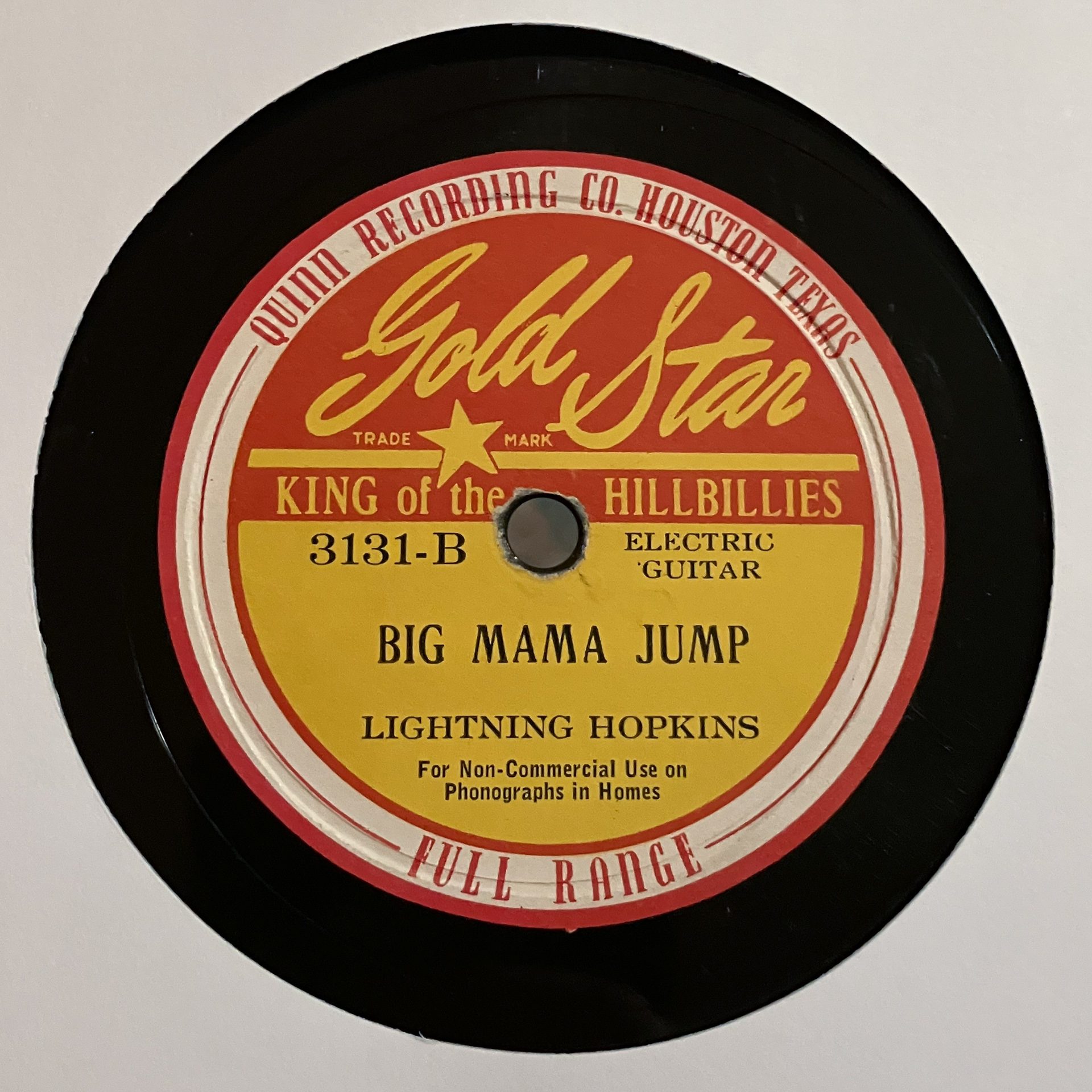
Lightnin’ Hopkins – Big Mama Jump – ‘47
Billie Holiday – St. Louis Blues – ‘40
Ink Spots – I Don’t Want to Set the World on Fire – ‘41
Louis Jordan – Let The Good Times Roll – ‘46
Gene Krupa – After You’ve Gone – ‘41
Memphis Minnie – Me and My Chauffeur Blues – ‘41
Muddy Waters – I Feel Like Going Home – ‘49
Dan Pickett – Something’s Gone Wrong – ‘49
Quintet of the Hot Club of France – Belleville – ’46
Sister Rosetta Tharpe – Strange Things Happening Everyday – ‘44
T-Bone Walker – Call It Stormy Monday – ‘47
Bob Wills – You’re From Texas – ‘42
- The Andrews Sisters– a close-harmony singing group consisting of sisters LaVerne, Maxene, and Patty Andrews. Born in Minnesota, they became one of the most popular vocal groups of the swing and World War II era. Known for their tight three-part harmonies and upbeat style, they recorded numerous hits including “Boogie Woogie Bugle Boy,” “Rum and Coca-Cola,” and “Don’t Sit Under the Apple Tree.” Blending swing, pop, and jazz influences, they sold millions of records and appeared in several films. Their energetic style and vocal arrangements influenced later vocal groups and remain closely associated with 1940s American popular music.
- Chet Atkins- a guitarist and record producer who was highly influential in country music. Known for his smooth fingerpicking style, often called the “Atkins style,” he helped popularize the use of the electric guitar in country music. As a producer at RCA Victor, Atkins played a major role in developing the “Nashville Sound,” a style that blended country with pop elements to broaden its appeal. Over his career, he won numerous Grammy Awards and was inducted into multiple music halls of fame, including the Country Music Hall of Fame and the Rock and Roll Hall of Fame.
- Big Maceo was a Chicago blues pianist and singer. A leading figure in the development of postwar Chicago blues piano, he recorded primarily for Bluebird Records in the 1940s. His best-known song, “Worried Life Blues,” became a blues standard and has been recorded by numerous artists. Big Maceo’s powerful, rolling piano style influenced later blues musicians, including Otis Spann. He suffered a stroke in 1946 that limited his playing, and he died in Chicago in 1953.
- Buchanan Brothers were a country music duo composed of brothers Chester and Lester Buchanan. They recorded country music in the 1940s on the RCA Victor label and scored their biggest hit with the 1946 song “Atomic Power”, which reached number 6 on Billboard’s “Most Played Juke Box Folk Records” chart and was later featured in the 1982 documentary The Atomic Café. Another of their recordings, the 1947 single “(When You See) Those Flying Saucers”, was used in the opening scene of the 2009 animated film Monsters vs. Aliens.
- Jerry Byrd, a musician and singer-songwriter best known for his work on the lap steel guitar in both country and Hawaiian music. He appeared on numerous radio programs, including the Grand Ole Opry, and was an influential session player who performed with artists such as Hank Williams, Ernest Tubb, Patsy Cline and Red Foley. Byrd was also a music publisher and teacher, helping mentor later notable players. In the early 1970s he moved to Hawaii, where he helped revive interest in Hawaiian steel guitar music and continued performing until his death. He was inducted into the Steel Guitar Hall of Fame and is celebrated for shaping the sound of the instrument in American music.
- The King Cole Trio– an influential jazz group led by pianist and vocalist Nat “King” Cole, originally formed in the late 1930s. They were sometimes called King Cole and His Swingsters before settling on the trio name, and the standard lineup featured Cole on piano and vocals, Oscar Moore (guitar) and Wesley Prince (bass), with later personnel changes including Irving Ashby and Johnny Miller. The trio stood out in an era dominated by big bands due to its piano–guitar–bass format with no drummer, creating an intimate, swinging sound that helped redefine small-group jazz and influenced future jazz trios. They became one of the most popular jazz combos of the 1940s, scored hits like “Straighten Up and Fly Right” and other recordings for Capitol Records, and set the foundation for Cole’s later solo career.
- Arthur Crudup– born Arthur William “Big Boy” Crudup; was a Delta blues singer, songwriter, and guitarist. He is best known for writing and recording influential blues songs such as “That’s All Right,” “My Baby Left Me,” and “So Glad You’re Mine,” which were later popularized by artists including Elvis Presley—with Presley’s version of “That’s All Right” often cited as a foundational early rock‑and‑roll record. Crudup’s work bridged traditional blues and emerging popular music forms, though he struggled with poor compensation during his career despite the wide impact of his songs.
- The Delmore Brothers, an influential country music duo consisting of brothers Alton Delmore and Rabon Delmore. Originating from Elkmont, Alabama, they became pioneers in country music from the 1930s through the early 1950s, known for their close vocal harmonies, skilled guitar work, and blending of gospel, blues, and traditional folk styles. They were regular performers on the Grand Ole Opry in the 1930s and scored enduring songs such as “Brown’s Ferry Blues”, “Gonna Lay Down My Old Guitar” and “Blues Stay Away From Me”. Their innovative sound helped shape later country music and influenced harmony duos like the Everly Brothers, and elements of rockabilly and early rock and roll. The Delmore Brothers were inducted into the Country Music Hall of Fame in 2001 in recognition of their significant contributions to American music.
- Duke Ellington– born Edward Kennedy Ellington; was an American composer, pianist, and bandleader who was one of the most important figures in jazz history. Leading his orchestra from the mid‑1920s for more than fifty years, Ellington composed thousands of works and helped elevate jazz to a sophisticated art form. His notable compositions include “Mood Indigo,” “It Don’t Mean a Thing (If It Ain’t Got That Swing),” and “Sophisticated Lady.” Celebrated for his innovative orchestration and rich harmonic language, Ellington’s influence extended across multiple musical genres. He received numerous honors during his lifetime and posthumously, including a Presidential Medal of Freedom and multiple Grammy Awards.
- The Golden Gate Quartet- a gospel vocal group originally formed in Norfolk, Virginia, in 1934 (initially as the Golden Gate Jubilee Quartet). They became one of the most successful and influential gospel ensembles of the 20th century, known for their sophisticated close harmonies and blending of jubilee, spirituals, and jazz‑influenced styles. During the 1930s and 1940s they gained national prominence through radio, recordings (including early hits on Victor and Columbia’s Okeh label), and performances at high‑profile events such as President Franklin D. Roosevelt’s inauguration. Over the decades their membership changed but the group remained active and helped shape the development of gospel, rhythm and blues, and later vocal harmony traditions.
- Lionel Hampton– a jazz vibraphonist, pianist, percussionist, bandleader, and composer who played a major role in the development of swing and big band jazz. He was one of the first musicians to popularize the vibraphone in jazz and became known for his energetic performances and versatile musicianship. Hampton performed with Benny Goodman’s groundbreaking quartet in the late 1930s and later led his own successful big bands. His long career spanned several decades, and he influenced generations of jazz and popular musicians.
- Billie Holiday, born Eleanora Fagan, was a jazz and swing music singer widely regarded as one of the most influential vocalists in jazz history. Nicknamed “Lady Day” by saxophonist Lester Young, she helped transform jazz singing with her expressive phrasing, emotional depth, and ability to manipulate tempo and rhythm. Holiday’s career included classic recordings of songs like “God Bless the Child,” “What a Little Moonlight Can Do” and the powerful protest piece “Strange Fruit.” Her work left a lasting impact on jazz, pop, and rhythm and blues, and she has been honored posthumously with inductions into the Rock and Roll Hall of Fame and other major music halls of fame.
- John Lee Hooker a iconic blues singer, guitarist and songwriter known as “the King of the Boogie” developed a distinct electric guitar–style adaptation of Delta blues with a driving rhythmic boogie that set him apart from his contemporaries. Hooker rose to prominence after moving to Detroit in the 1940s, where his 1948 recording “Boogie Chillen’” became a hit and established his raw, hypnotic sound. Over a long career spanning more than five decades, he recorded classics like “Crawling King Snake,” “Dimples,” and “Boom Boom,” influenced generations of musicians, and embraced both solo performances and collaborations.
- Lightnin’ Hopkins– a blues guitarist, singer, and songwriter, widely regarded as one of the most important figures in Texas blues. Known for his expressive fingerstyle guitar playing, improvisational style, and soulful vocals, Hopkins recorded hundreds of songs over a career spanning more than four decades. He achieved both regional and national fame, influencing generations of blues and rock musicians. Some of his notable recordings include “Mojo Hand,” “Baby Please Don’t Go,” and “Trouble in Mind.” Hopkins’ music combined traditional blues themes with his own unique storytelling, making him a central figure in American blues history.
- The Ink Spots– a vocal pop group formed in Indianapolis in 1934, who gained international fame in the 1930s and 1940s for their smooth close‑harmony singing. They helped lay the groundwork for rhythm and blues, doo‑wop, and early rock and roll with their distinctive style featuring a high tenor lead and spoken bass parts. The group scored many hits including “If I Didn’t Care” and were one of the first African‑American groups to achieve broad popularity across both Black and white audiences. They were inducted into the Rock and Roll Hall of Fame in 1989 and the Vocal Group Hall of Fame in 1999.
- Louis Jordan– was a musician, bandleader, and saxophonist who was a pioneering figure in jump blues and an important influence on the development of rhythm and blues and early rock and roll. He led Louis Jordan and His Tympany Five, scoring numerous hits in the 1940s such as “Caldonia,” “Choo Choo Ch’Boogie,” and “Let the Good Times Roll.” Jordan’s upbeat, humorous style and tight musicianship made him one of the most popular African‑American entertainers of his era, and his work helped bridge swing jazz and later popular music forms. He was inducted into the Rock and Roll Hall of Fame in 1987.
- Gene Krupa a jazz drummer, bandleader, and composer widely regarded as one of the most influential drummers in the history of modern music. He rose to fame in the 1930s with the Benny Goodman Orchestra, where his energetic style and showmanship helped elevate the role of the drum kit as a solo instrument in jazz. Known for his powerful technique and signature drum solos (especially on tracks like “Sing, Sing, Sing”), Krupa became a major figure in swing music and later led his own successful ensembles. He also inspired generations of drummers across jazz, popular, and rock genres.
- Memphis Minnie was a blues guitarist, vocalist, and songwriter. A major figure in classic female blues and Chicago blues, she recorded more than 200 songs between the 1920s and 1950s. Her best-known composition, “When the Levee Breaks” (1929), later became widely recognized through its adaptation by Led Zeppelin. Known for her strong voice and innovative guitar playing, Memphis Minnie was one of the few prominent female blues guitarists of her era and influenced generations of blues and rock musicians.
- Muddy Waters– born McKinley Morganfield; was a blues singer, guitarist, and songwriter who is often cited as the “father of modern Chicago blues.” Born in Mississippi, he moved to Chicago in the early 1940s and helped electrify the Delta blues, shaping the sound of postwar urban blues with hits like “Hoochie Coochie Man,” “Mannish Boy,” and “Got My Mojo Working.” His powerful voice, electric guitar-playing, and band arrangements influenced generations of musicians across blues and rock, including the Rolling Stones and other British Invasion artists. Waters was inducted into the Rock and Roll Hall of Fame in 1987.
- Dan Pickett, born James Founty; was a piedmont blues and country blues singer, guitarist, and songwriter. He recorded fourteen tracks for Gotham Records in 1949, several of which have been reissued and praised for their distinctive rhythmic style and compelling phrasing. Pickett’s work has gained recognition among blues enthusiasts as some of the notable post‑World War II country blues recordings, though relatively little is known about his life outside of his recording session and basic biographical details.
- The Quintet of the Hot Club of France– was a highly influential French jazz group formed in Paris in 1934 by guitarist Django Reinhardt and violinist Stéphane Grappelli. One of the earliest and most significant continental jazz ensembles in Europe, the group was known for its all‑string lineup—featuring acoustic guitar, violin, and double bass without drums—which was novel at the time and helped define a distinctive style of swing jazz later called jazz manouche or Hot Club jazz. The classic lineup included Reinhardt, Grappelli, bassist Louis Vola, and rhythm guitarists Roger Chaput and Joseph Reinhardt (Django’s brother). The quintet recorded extensively and enjoyed wide popularity before and after World War II, influencing jazz across Europe and beyond with its virtuosic playing and vibrant repertoire.
- Sister Rosetta Tharpe– born Rosetta Nubin a singer, songwriter, and pioneering gospel and early rock‑and‑roll guitarist. Known for her powerful vocals and virtuosic electric guitar playing, she blended gospel, blues, and rhythm and blues, influencing a wide range of later artists in rock and soul. Tharpe’s hits included “Strange Things Happening Every Day” and “This Train,” and she was one of the first musicians to bring electric guitar to prominence in popular music. Her innovative style helped bridge sacred and secular music, and she has been widely acknowledged as a major influence on artists such as Chuck Berry, Little Richard, and Johnny Cash.
- T‑Bone Walker– born Aaron Thibeaux Walker; was a blues guitarist, singer, and songwriter who was one of the most influential figures in the development of electric blues guitar. Known for his smooth vocals and sophisticated, jazz‑inflected guitar style, Walker helped popularize the amplified electric guitar in blues music and influenced generations of players, including B.B. King and Chuck Berry. His best‑known recordings include “Call It Stormy Monday (But Tuesday Is Just As Bad).”
- Bob Wills– born James Robert Wills; was a musician, songwriter, and bandleader best known as a pioneer and leading figure of western swing music, a genre that blended country, jazz, blues, and big‑band swing. He formed Bob Wills and His Texas Playboys in the 1930s, with whom he popularized western swing through radio broadcasts and dance‑hall performances. Wills was widely known as the “King of Western Swing” and became one of the most influential figures in American country music, later being inducted into the Country Music Hall of Fame.